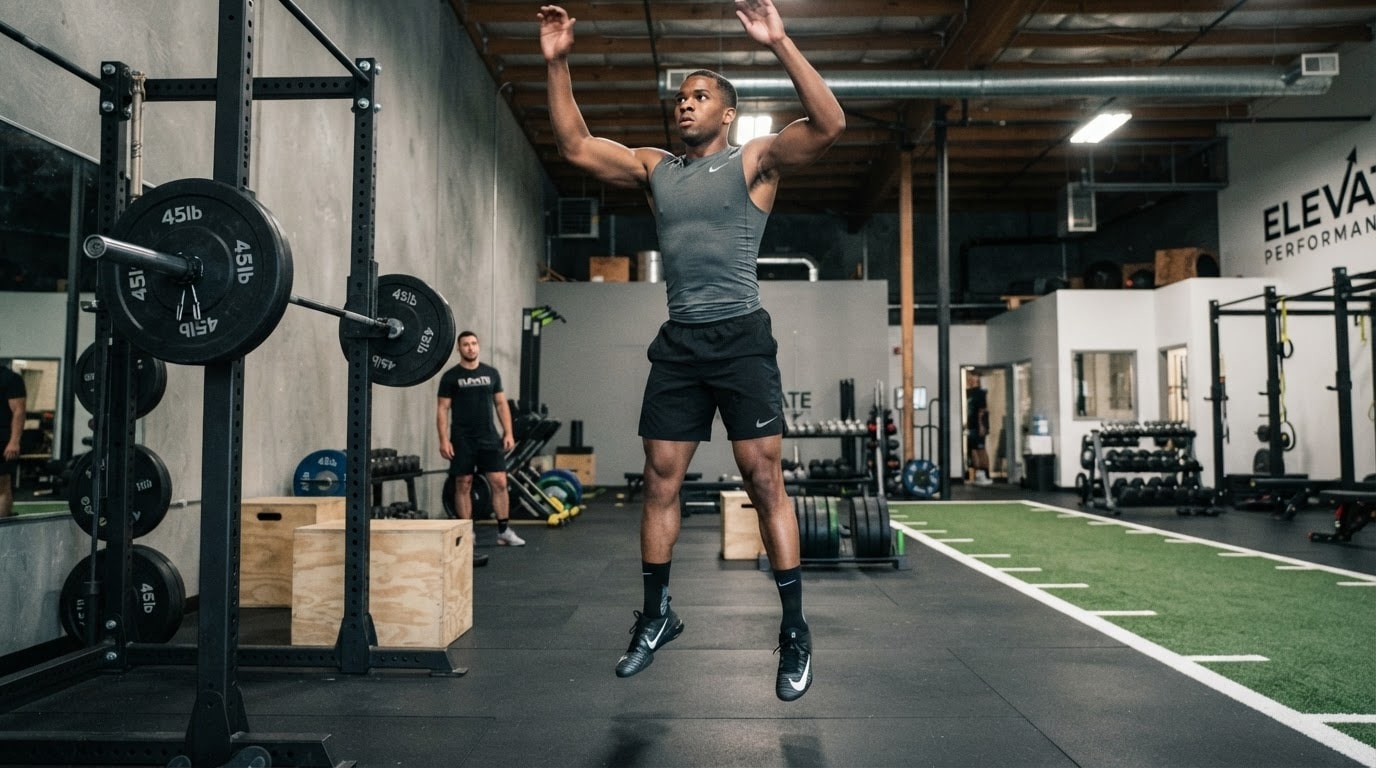

In the world of youth sports today, it is easy to get distracted by the noise. Social media is flooded with videos of teenagers performing complex agility ladder drills, balancing on bosu balls, or using advanced velocity-tracking devices. It looks futuristic, high-tech, and elite. But if we are being completely honest, it is a distraction from what drives long-term athletic success.
For the developing youth athlete, the path to the next level is not paved with hyper-specialized programming or expensive training gadgets. It’s built on a foundation of basic, unsexy, fundamental strength.
When a young athlete shows promise in a specific sport, the immediate temptation is to dive straight into sport-specific training or complex, high-intensity programming. This approach often treats a 14-year-old like a finished product rather than a developing human being.
Using highly specialized tools and overly complex training blocks too early is like trying to put a racing spoiler on a car that doesn’t have an engine yet. It misses the point. Advanced training protocols are meant to squeeze out the final fractions of performance from an already mature, highly adapted athlete. When applied to youth athletes, it often leads to two major issues:
1 Overuse Injuries: Repeating the exact same sport-specific patterns year-round without building a resilient structural foundation leads to chronic joint stress and burnout.
2 Plateaued Performance: An athlete can only be as fast or agile as their base of absolute strength allows. Without building that engine first, they hit a hard ceiling early in their career.
Instead of asking, “How do we make this workout look exactly like football, basketball, or soccer?” we should be asking, “How do we make this athlete fundamentally more robust?”
Developing a broad base of general physical preparation (GPP) creates a massive reservoir of athletic potential. When a young athlete focuses on mastering basic movement patterns—squatting, hinging, pushing, pulling, and carrying—something incredible happens. They build absolute strength.
Strength is the mother of all athletic qualities. It is the foundation upon which everything else is built.
More Force, More Speed: Sprinting and changing direction are ultimately about force application—how much power an athlete can drive into the ground in a fraction of a second. A stronger athlete can produce more force, making them naturally faster and more explosive.
Built-In Body Armor: Strength training increases bone density, strengthens tendons, and improves joint stability. It builds structural balance, which acts as body armor against the standard contact and non-contact injuries that occur during a demanding season.
Accelerated Skill Acquisition: A strong, coordinated body adapts to new sports skills much faster. It gives the sport coach a highly capable canvas to work with.
The most effective youth development programs don’t require a trailer full of specialized gear. They require consistency, excellent coaching on technique, and a commitment to progressive overload.
Instead of chasing the latest fitness trend or buying into complex, multi-layered programming cycles, keep the focus on the variables that actually move the needle: mastering body weight, perfecting lifting mechanics, manipulating tempo to build control, and gradually adding weight to the bar over time.
Let the kids play multiple sports to develop natural coordination and let the weight room be the place where they build the structural engine to support it. If you master the fundamentals and focus on getting genuinely stronger, the sport-specific skills will take care of themselves.
Stick to the basics. Build the foundation first, and the elite performance will follow.
Coach Jermaine